
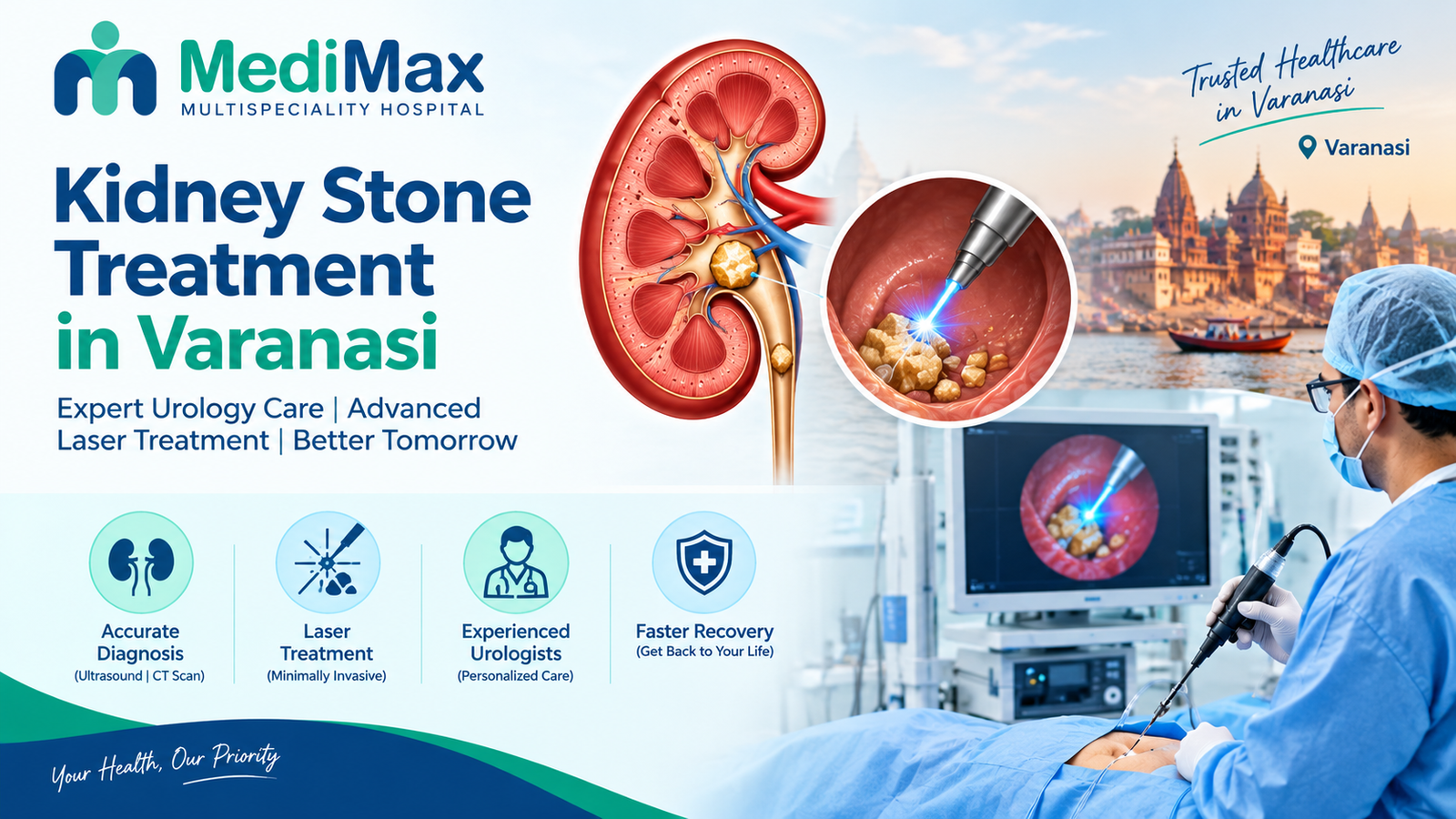
Kidney Stone Treatment in Varanasi: Symptoms, Diagnosis and Laser Treatment Options
Kidney stones are a common urinary tract condition that can cause severe pain, discomfort while urinating and other symptoms that affect everyday life. They develop when minerals and salts in the urine form hard deposits inside the kidneys. Some stones are small enough to pass naturally, while others may require medical treatment or a procedure.
If you are looking for Kidnay stone treatment in varanasi, understanding the symptoms, diagnostic tests and available treatment options can help you make informed decisions about your health. The right treatment depends on the size and location of the stone, whether it blocks urine flow, the severity of symptoms and your overall health.
At MediMax Hospital, patients can explore urology services and consult a qualified healthcare professional for an assessment of kidney stones and guidance on suitable treatment options.
What Are Kidney Stones?
Kidney stones, also called renal calculi, are hard deposits formed from minerals and salts in the urine. They can range from tiny crystals to larger stones that may obstruct the urinary tract.
Normally, urine carries waste products out of the body. When certain substances become too concentrated, crystals can form and gradually grow into stones.
Common Types of Kidney Stones
- Calcium stones: Often made of calcium oxalate and are among the most common types.
- Uric acid stones: May develop when urine remains too acidic.
- Struvite stones: Can occur in association with certain urinary tract infections.
- Cystine stones: Uncommon stones associated with an inherited condition called cystinuria.
Identifying the stone type can help a doctor recommend appropriate treatment and preventive measures.
What Are the Common Symptoms of Kidney Stones?
Some kidney stones do not cause noticeable symptoms until they move into the ureter or obstruct urine flow. Symptoms vary according to the size and location of the stone.
Common kidney stone symptoms include:
- Sharp pain in the back, side or lower abdomen
- Pain that spreads towards the groin
- Pain that comes in waves
- Blood in the urine
- Burning or discomfort during urination
- Frequent or urgent urination
- Nausea or vomiting
- Difficulty passing urine in cases of obstruction
These symptoms can also occur with other urinary conditions. A medical assessment is necessary to identify the cause.
When to seek urgent care: Fever or chills with suspected kidney stones, inability to pass urine, persistent vomiting or severe uncontrolled pain requires prompt medical attention. A urinary obstruction combined with infection can be a medical emergency.
What Causes Kidney Stones?
Kidney stones usually develop due to a combination of factors rather than a single cause.
1. Inadequate Fluid Intake
When you do not drink enough fluids, urine can become concentrated. This may increase the likelihood of crystal formation.
2. Dietary Factors
High sodium intake can increase the amount of calcium passed into urine in some people. Certain dietary patterns may also contribute to stone formation, depending on the type of stone.
A balanced diet is generally preferable to eliminating entire food groups without medical advice.
3. Family History
People with a family history of kidney stones may have a higher risk of developing them.
4. Certain Medical Conditions
Some metabolic conditions, digestive disorders and recurrent urinary tract infections can increase the risk of particular types of kidney stones.
5. Previous Kidney Stones
People who have experienced kidney stones before may develop them again. Preventive advice and follow-up can help reduce recurrence risk.
How Is Kidney Stone Diagnosis Performed?
Accurate kidney stone diagnosis helps determine the stone’s size, location and possible effect on kidney function. These findings guide the choice between observation, medication and a procedure.
Medical History and Physical Examination
A doctor may ask about the location and severity of pain, urinary symptoms, previous stones, medications and existing medical conditions.
Urine Tests
Urine testing can help identify blood, signs of infection and other abnormalities. Additional testing may be recommended for people who develop stones repeatedly.
Blood Tests
Blood tests may be used to assess kidney function and check relevant mineral levels or signs of infection, depending on the clinical situation.
Ultrasound and CT Scan
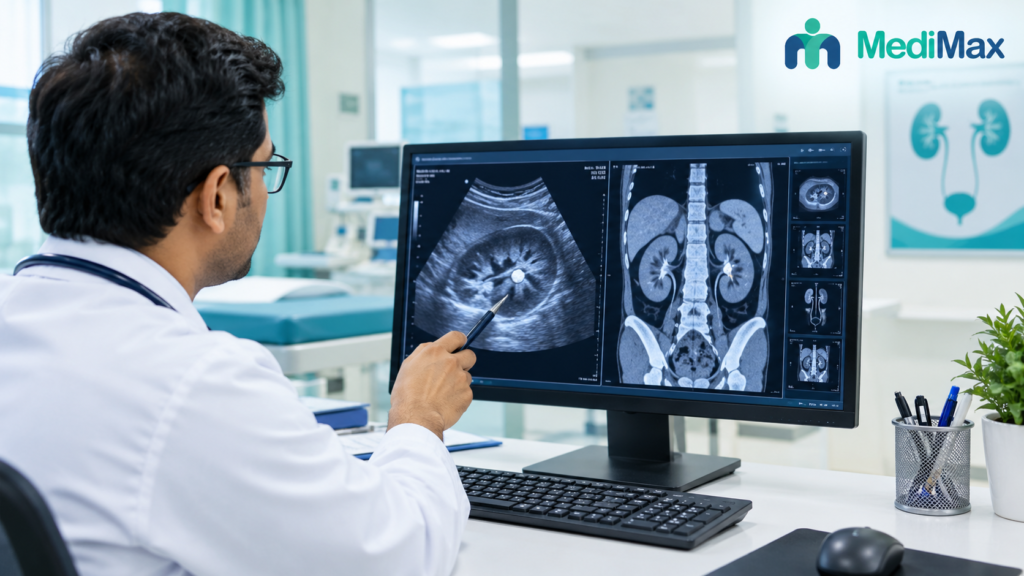
An ultrasound can identify many kidney stones and may show signs of urinary obstruction. A CT scan without contrast is often used when more detailed information about stone size and location is required.
The appropriate test depends on the patient’s symptoms, age, pregnancy status and medical history.
kidney Stone Treatment in Varanasi: Available Treatment Options
There is no single treatment suitable for every kidney stone. The doctor considers the stone’s size, location, composition, symptoms and effect on kidney function before recommending a treatment plan.
1. Observation and Medical Management
Some small stones may pass naturally without surgery. Depending on the patient’s condition, a doctor may recommend pain relief, suitable fluid intake, medication and follow-up imaging.
Certain medicines may help selected stones pass, particularly stones located in the ureter. Medication should only be taken under medical guidance.
Do not force excessive water intake during severe pain or suspected urinary obstruction.
2. Laser Kidney Stone Treatment in Varanasi
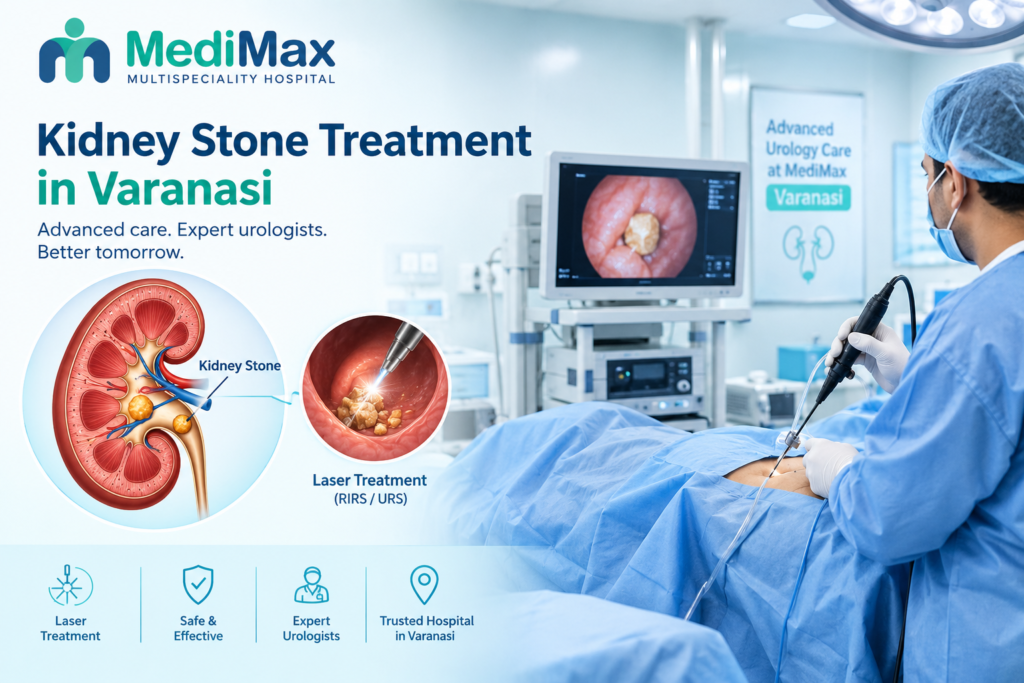
Laser treatment is a minimally invasive option for selected urinary stones. During a ureteroscopic procedure, a thin instrument is passed through the urinary tract to reach the stone. A laser breaks the stone into smaller fragments that can be removed or passed in urine.
Potential benefits include treatment without a large surgical incision. However, the procedure’s suitability, risks and recovery time depend on the stone and the patient’s health.
3. RIRS Treatment
Retrograde Intrarenal Surgery (RIRS) is a minimally invasive procedure used for selected kidney stones.
A flexible ureteroscope is guided through the natural urinary passage into the kidney. A laser may then be used to break the stone into smaller pieces.
Some patients may require a temporary ureteral stent after the procedure to support urine drainage. The urologist explains the expected recovery and follow-up requirements.
4. PCNL Surgery
Percutaneous Nephrolithotomy (PCNL) is commonly considered for large or complex kidney stones, including many stones larger than 2 cm.
The surgeon creates a small opening in the back to access the kidney and remove the stone using specialised instruments.
PCNL is more invasive than procedures performed through the natural urinary passage, but it can be effective for appropriately selected patients with a large stone burden.
5. Shock Wave Lithotripsy
Shock Wave Lithotripsy (SWL) uses externally generated shock waves to break certain stones into smaller fragments that can pass through urine.
It is not suitable for every stone. The size, location and hardness of the stone influence whether this treatment is likely to be effective.
How Does a Doctor Choose the Right Treatment?
| Treatment option | When it may be considered |
| Observation and medication | Selected small stones without concerning complications |
| Laser ureteroscopy | Suitable stones in the ureter or urinary tract |
| RIRS | Selected kidney stones accessible with a flexible scope |
| PCNL | Large or complex kidney stones |
| SWL | Selected stones suitable for shock wave treatment |
These are general guidelines. A qualified urologist must assess each case before recommending a procedure.
What Is the Recovery Time After Kidney Stone Treatment?
Recovery varies according to the procedure, the number and size of stones, the patient’s general health and whether complications occur.
- After medical management: Follow-up may be needed to confirm that the stone has passed and urine flow is normal.
- After laser ureteroscopy: Many patients return to routine activities within a few days, although discomfort or urinary symptoms may temporarily continue.
- After RIRS: Recovery varies, and a temporary stent may cause urinary urgency, discomfort or blood in the urine.
- After PCNL: Recovery may take longer because the procedure involves a small incision in the back.
Follow the treating doctor’s instructions about medication, fluid intake, physical activity and follow-up appointments. Seek medical advice if you develop fever, worsening pain, heavy bleeding or difficulty passing urine.
How Can You Help Prevent Kidney Stones?
Kidney stones can recur, but suitable preventive measures may reduce the risk.
Drink Enough Fluids
Adequate fluid intake helps dilute urine. The amount needed depends on your health, climate and activity level. People with certain heart or kidney conditions may need fluid restrictions.
Reduce Excess Sodium
Limiting heavily salted and highly processed foods may help reduce stone risk in some people.
Maintain a Balanced Diet
Do not automatically eliminate calcium-rich foods. Normal dietary calcium may help prevent some calcium oxalate stones. Specific dietary changes should depend on the stone type and medical advice.
Attend Follow-Up Appointments
If a stone is available for analysis, the doctor may recommend testing its composition. People with recurrent stones may benefit from additional metabolic testing and a personalised prevention plan.
Common Questions and Important Considerations
Is laser treatment suitable for every kidney stone?
No. Laser treatment is suitable for selected stones. The doctor considers the stone’s size, location, complexity and the patient’s overall health before recommending it.
Can kidney stones damage the kidneys?
A stone that causes persistent urinary obstruction or is associated with infection can damage kidney function if not treated promptly. Timely assessment is important when symptoms are present.
Should every kidney stone be removed?
No. Some small stones can pass naturally and may only require monitoring. Others need medication or a procedure because of their size, symptoms or complications.
Why is follow-up important?
Follow-up helps confirm that the stone has passed or been removed and that there is no ongoing obstruction. It also helps identify preventive measures for future stones.
Frequently Asked Questions
1. What is the best treatment for kidney stones?
The best treatment depends on the stone’s size, location and complexity. Options include observation, medication, laser treatment, RIRS, PCNL and SWL.
2. How do I know if I have kidney stones?
Common symptoms include side or back pain, blood in urine, painful urination and nausea. Some stones cause no symptoms. Medical evaluation and appropriate tests are needed for diagnosis.
3. Is laser kidney stone treatment safe?
Laser procedures are commonly used for selected stones, but all procedures carry potential risks. Your urologist can explain the benefits, risks and alternatives for your specific condition.
4. Can small kidney stones pass naturally?
Yes. Some small stones pass without surgery. The likelihood depends on the stone’s size and location, and follow-up may be required.
5. Is kidney stone treatment always surgical?
No. Some stones can be managed with observation and medication. Procedures are considered when the stone is unlikely to pass, causes significant symptoms or creates complications.
6. How long does laser kidney stone treatment take?
The duration depends on the size, number and location of the stones and the complexity of the procedure. Your treating team can provide an estimate after reviewing your tests.
7. Can kidney stones return after treatment?
Yes. Removing a stone does not always remove the factors that caused it. Hydration, appropriate dietary changes and medical follow-up may help reduce recurrence.
8. Which tests are used for kidney stone diagnosis?
Doctors may recommend urine tests, blood tests, ultrasound or a CT scan. The choice depends on the symptoms and clinical circumstances.
9. When should I seek urgent medical care for kidney stones?
Seek urgent care if you have fever or chills with suspected stones, severe uncontrolled pain, persistent vomiting or an inability to pass urine.
10. Where can I learn about stone treatment in Varanasi?
You can visit the MediMax Hospital website to learn about its urology services and contact the hospital to enquire about an appointment and appropriate treatment options.
Conclusion
Kidney stones can cause pain and urinary problems, but several treatment options are available. Accurate diagnosis helps determine whether observation, medication, laser treatment, RIRS, PCNL or another procedure is appropriate.
If you are considering stone treatment in Varanasi, consult a qualified urologist for an assessment based on your symptoms, diagnostic results and medical history. Appropriate treatment, follow-up and preventive care can help manage kidney stones and reduce the risk of recurrence.
Call to Action
Looking for Stone Treatment in Varanasi?
- Hospital: MediMax Multispeciality Hospital
- Address: BLW, Chitaipur–Chunar Road, near HP Petrol Pump, Gokul Nagar, DLW Colony, Bhullanpur, Kanchanpur, Varanasi, Uttar Pradesh – 221004
- Call: +91 97951 51569
- Website: https://medimaxhospital.in/
- Contact Page: https://medimaxhospital.in/contact/