
Ear Infection Treatment in Varanasi: Symptoms, Causes, Diagnosis and Treatment
Ear infections can cause ear pain, itching, fluid discharge, temporary hearing difficulties and discomfort during daily activities. They can affect children as well as adults, and the symptoms may vary depending on which part of the ear is affected. While some mild infections improve with appropriate care, others require medical evaluation and specific treatment.
Understanding the warning signs and knowing when to consult a doctor can help prevent complications. If you are searching for Ear Infection Treatment in Varanasi, learning about the causes, diagnosis and available treatment options is a useful first step towards better ear health.
At MediMax Hospital, patients can seek medical evaluation for ear-related complaints and discuss appropriate treatment with a qualified doctor.
What Is an Ear Infection?
An ear infection occurs when microorganisms, such as bacteria or viruses, cause inflammation or infection in part of the ear. Some infections develop after a cold or respiratory illness, while others are associated with trapped moisture, skin irritation or problems affecting normal drainage from the middle ear.
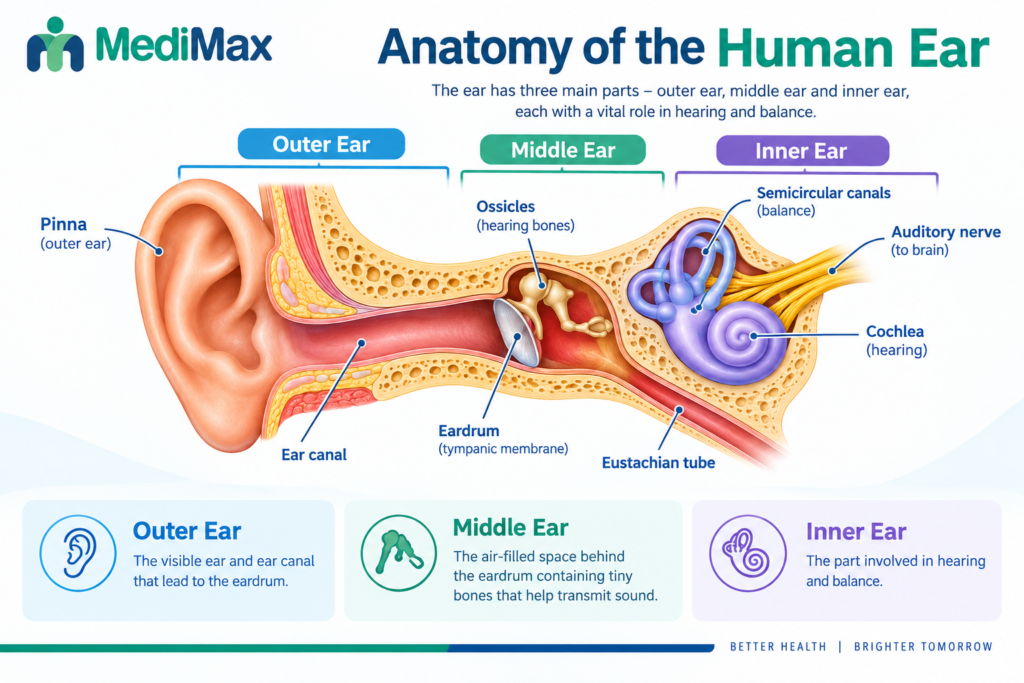
The ear has three main parts:
- Outer ear: The visible ear and ear canal that lead to the eardrum.
- Middle ear: The air-filled space behind the eardrum containing tiny bones that help transmit sound.
- Inner ear: The part involved in hearing and balance.
Types of Ear Infections
- Outer ear infection (otitis externa)
This infection affects the ear canal and is sometimes called swimmer’s ear. Water trapped in the ear, scratching, cotton-bud use or damage to the protective skin can increase the risk.
- Middle ear infection (otitis media)
A middle ear infection often develops after a cold or another upper respiratory infection. Fluid can collect behind the eardrum, creating pressure and discomfort. It is particularly common in children.
- Inner ear inflammation
Inflammation affecting inner-ear structures may cause dizziness, balance difficulties or hearing changes. Not every inner-ear problem is an infection, so proper diagnosis is important.
Common Symptoms of an Ear Infection
Symptoms depend on the type and severity of the infection. Some people experience mild discomfort, while others develop significant pain or hearing difficulties.
Common signs include:
- Earache or a feeling of pressure inside the ear
- Itching or irritation in the ear canal
- Fluid or pus coming out of the ear
- A blocked-ear sensation
- Temporary reduction in hearing
- Fever, particularly in some middle ear infections
- Difficulty sleeping because of pain
- Dizziness or balance problems in certain cases
Hearing Problems Due to Ear Infection
Fluid behind the eardrum, swelling or debris in the ear canal can interfere with sound transmission. This may lead to muffled hearing or a feeling that the ear is blocked.
Hearing often improves when the underlying problem resolves, but persistent hearing loss should not be ignored. Sudden hearing loss, particularly when it develops over hours or a few days, needs urgent medical assessment rather than waiting for an infection to clear.
What Causes Ear Infections?
Several factors can contribute to ear infections. Identifying the likely cause helps a doctor recommend suitable care.
1. Viral or Bacterial Infections
Viruses that cause colds can contribute to middle ear inflammation and fluid accumulation. Bacteria may also cause some infections. Symptoms alone do not always reveal whether antibiotics are needed.
2. Water Trapped in the Ear
Frequent swimming or prolonged moisture can encourage irritation and infection of the outer ear canal, particularly when the skin’s protective barrier is damaged.
3. Earwax Blockage and Irritation
Earwax normally protects the ear canal. However, impacted wax can cause blockage and discomfort. Inserting cotton buds, hairpins or other objects can push wax deeper and injure the ear.
Earwax blockage is not the same as an ear infection, so the cause of symptoms should be confirmed before treatment.
4. Colds and Nasal Congestion
The Eustachian tube connects the middle ear to the back of the nose and helps regulate pressure. A cold or allergies can affect its function, allowing fluid to build up behind the eardrum.
5. Risk Factors in Children
Children are more likely to develop middle ear infections because their Eustachian tubes are shorter and more horizontal than those of adults. Exposure to tobacco smoke and frequent respiratory infections may also increase risk.
How Is an Ear Infection Diagnosed?
Accurate diagnosis is important because different ear conditions can produce similar symptoms. Ear Pain Treatment in Varanasi should begin with identifying the underlying cause rather than simply treating the pain.
Medical History and Ear Examination
A doctor may ask when the symptoms started, whether there is fever or discharge, and whether the patient has experienced recent colds, swimming, hearing changes or previous ear infections.
An otoscope is commonly used to examine the ear canal and eardrum. The examination may help identify redness, swelling, fluid behind the eardrum, discharge or damage to the eardrum.
Hearing Tests and Further Evaluation
A hearing test may be recommended if hearing problems persist or recur. In selected cases, additional tests or specialist evaluation may be necessary, particularly when symptoms are severe, unusual or not improving.

Ear Infection Treatment in Varanasi: Available Treatment Options
Treatment depends on the location of the infection, the patient’s age, symptom severity and examination findings. There is no single treatment that is appropriate for every ear infection.
1. Pain Relief and Monitoring
Some mild middle ear infections improve without antibiotics. A doctor may recommend appropriate pain relief and observation, depending on the patient’s age and clinical condition.
Parents should consult a healthcare professional before giving medication to children. Aspirin should not be given to children unless specifically directed by a qualified clinician.
2. Antibiotics When Necessary
Antibiotics are not effective against viruses and are not required for every ear infection. A doctor may prescribe them when a bacterial infection is suspected or confirmed and treatment is clinically indicated.
Patients should follow the prescribed instructions and avoid using leftover antibiotics or stopping a prescribed course without medical advice.
3. Ear Drops for Outer Ear Infections
Some outer ear infections require prescribed ear drops containing an appropriate antimicrobial or anti-inflammatory medicine. The correct medicine depends on the diagnosis and whether the eardrum is intact.
Do not use unprescribed drops, oils or home remedies inside the ear, especially if discharge or eardrum damage is possible.
4. Cleaning the Ear Canal When Appropriate
When discharge or debris blocks the ear canal, a trained healthcare professional may clean it using a suitable technique. This should not be attempted at home using sharp objects or cotton buds.
5. Treatment for Recurrent Middle Ear Problems
Some patients, especially children with persistent fluid behind the eardrum or repeated infections, may need further assessment by an ENT specialist. In selected cases, a specialist may discuss procedures such as placing ventilation tubes.
Procedures are not necessary for every patient; the decision depends on the clinical findings and the effect on hearing and daily life.
When Should You See an ENT Specialist?
Seek medical advice if ear pain is severe, symptoms are worsening, discharge develops or the problem does not improve.
Prompt medical assessment is especially important if you notice:
- High fever or feeling significantly unwell
- Swelling, redness or tenderness behind the ear
- New or persistent hearing loss
- Repeated ear infections
- Persistent discharge from the ear
- Dizziness accompanied by other concerning symptoms
Seek emergency medical care for sudden hearing loss, facial weakness, severe dizziness with neurological symptoms, or swelling behind the ear accompanied by fever or significant illness. Do not delay urgent care while trying home remedies.
Home Care and Prevention Tips
Simple precautions can help protect the ears and reduce irritation while you follow medical advice.
- Keep the ears dry if you are prone to outer ear infections.
- Avoid inserting cotton buds or other objects into the ear canal.
- Do not use ear candles or attempt to remove impacted wax yourself.
- Avoid swimming while an active outer ear infection is being treated, unless your doctor advises otherwise.
- Follow the prescribed treatment instructions and attend follow-up appointments when recommended.
- Keep children away from tobacco smoke and maintain routine vaccinations according to medical advice.
If you have ear discharge or suspect a damaged eardrum, ask a doctor before using ear drops or allowing water into the ear.
Common Questions and Important Considerations
Can an ear infection go away on its own?
Some mild middle ear infections improve without antibiotics. However, the cause of ear pain cannot always be identified from symptoms alone. Seek medical advice when symptoms are severe, persistent or worsening.
Are all ear infections treated with antibiotics?
No. Antibiotics treat certain bacterial infections but do not work against viruses. Treatment may involve pain relief, monitoring, prescribed ear drops or other care, depending on the diagnosis.
Can an ear infection cause permanent hearing loss?
Many infection-related hearing changes are temporary. However, severe or untreated conditions can sometimes lead to complications. Persistent or sudden hearing loss needs prompt medical assessment.
Frequently Asked Questions
1. What are the first signs of an ear infection?
Early signs may include ear pain, itching, pressure, a blocked-ear sensation or muffled hearing. Some people also develop fever or fluid discharge.
2. How long does an ear infection take to heal?
Recovery varies by infection type and severity. Some mild middle ear infections improve within a few days, while other infections may take longer and require prescribed treatment. Follow your doctor’s advice if symptoms persist.
3. When should I seek Ear Pain Treatment in Varanasi?
Consult a doctor if ear pain is severe, recurrent, associated with discharge or fever, or not improving. Sudden hearing loss and swelling behind the ear require urgent assessment.
4. Can ear infections cause hearing problems?
Yes. Fluid behind the eardrum or swelling in the ear canal may reduce sound transmission and cause temporary hearing changes. Persistent hearing problems need evaluation.
5. Is it safe to use cotton buds to clean my ears?
No. Cotton buds can push wax deeper, irritate the ear canal or injure the eardrum. The ears generally do not need cleaning deep inside the canal.
6. Can children develop ear infections more often than adults?
Yes. Children’s Eustachian tubes are shaped differently, which makes middle ear infections more common. Repeated infections or hearing concerns should be discussed with a paediatrician or ENT specialist.
7. Can swimming cause an ear infection?
Water trapped in the outer ear canal can contribute to swimmer’s ear. Keeping the ears dry and avoiding objects that irritate the canal can help reduce risk.
8. Should I use ear drops without a doctor’s prescription?
It is best to avoid unprescribed ear drops. Some medicines may be unsuitable if the eardrum is damaged or the type of infection is uncertain.
9. What happens if an ear infection is left untreated?
Some infections resolve naturally, but others can worsen or cause complications. Persistent pain, discharge, fever or hearing changes should be assessed by a healthcare professional.
10. Where can I seek ear infection evaluation in Varanasi?
You can contact MediMax Hospital in Varanasi to enquire about medical evaluation for ear pain, ear discharge and other ear-related concerns. A doctor can assess your symptoms and advise whether ENT specialist care is needed.
Conclusion
Ear infections can cause pain, discharge, blocked-ear sensations and hearing difficulties. Recognising the symptoms, avoiding unsafe home remedies and seeking timely medical advice can help reduce the risk of complications. Treatment may involve monitoring, pain relief, prescribed ear drops, antibiotics when indicated or specialist procedures for selected conditions.
If you are looking for Ear Infection Treatment in Varanasi, consult a qualified healthcare professional for an accurate diagnosis and treatment plan tailored to your needs. Persistent or sudden hearing changes should never be ignored.
Call to Action
Need Medical Advice for Ear Pain or an Ear Infection?
Do not ignore persistent ear pain, discharge, blocked-ear sensations or hearing difficulties. Contact MediMax Hospital to enquire about an appropriate consultation and evaluation for your ear-related symptoms.
MediMax Hospital, Varanasi
Address: BLW, Chitaipur–Chunar Road, near HP Petrol Pump, Gokul Nagar, DLW Colony, Bhullanpur, Kanchanpur, Varanasi, Uttar Pradesh – 221004.
Phone :Tel: 097951 51569
Website: https://medimaxhospital.in/
- MediMax Hospital homepage: https://medimaxhospital.in/
- ENT page: https://medimaxhospital.in/best-ent-hospital-in-varanasi/
- Doctors page: https://medimaxhospital.in/doctors/
- Contact page: https://medimaxhospital.in/contact/